REQUEST A DEMO DEVICE! Want a WAINUA demo device for your clinic? An AstraZeneca team member would be happy to provide one. Email us now

PrWAINUA™ eplontersen injection
  • Home
  • Trial Design & Results
    • Trial Design
    • Efficacy Data
    • TTR Suppression Data
    • Safety & Tolerability Profile
  • Mechanism of Action
  • Dosing & Administration
  • Resources & Support
    • Resources
    • Patient Support
    • Coverage
  • Important Safety Information
  • Product Monograph

Request a WAINUA Demo Device – Email us now

WAINUA® Important Safety Information

Indications and clinical use:

WAINUA (eplontersen injection) is indicated for the treatment of polyneuropathy associated with stage 1 or stage 2 hereditary transthyretin-mediated amyloidosis in adults.

Relevant warnings and precautions:

  • Reduced serum vitamin A levels and recommended supplementation
  • Driving and operating machinery
  • Potential risk of ocular symptoms
  • Use in pregnant or breastfeeding women
  • Risks related to reproductive health, including teratogenic risk

For more information:

Please consult the Product Monograph for important information relating to adverse reactions, drug interactions, and dosing information, which has not been discussed in this piece.

The Product Monograph is also available by calling 1-877-404-8277 or emailing ask-medical@astrazeneca.ca.

Reference: WAINUA® Product Monograph. AstraZeneca Canada Inc. August 26, 2025.

EN FR

WAINUA®

Efficacy Data

  • On this page

  • mNIS+7 results
  • Norfolk QoL-DN results
  • NSC data
  • SF-36 PCS data
  • PND data
  • mBMI data


  • LEARN MORE

  • Trial Design
  • TTR Suppression Data
  • Safety & Tolerability Profile

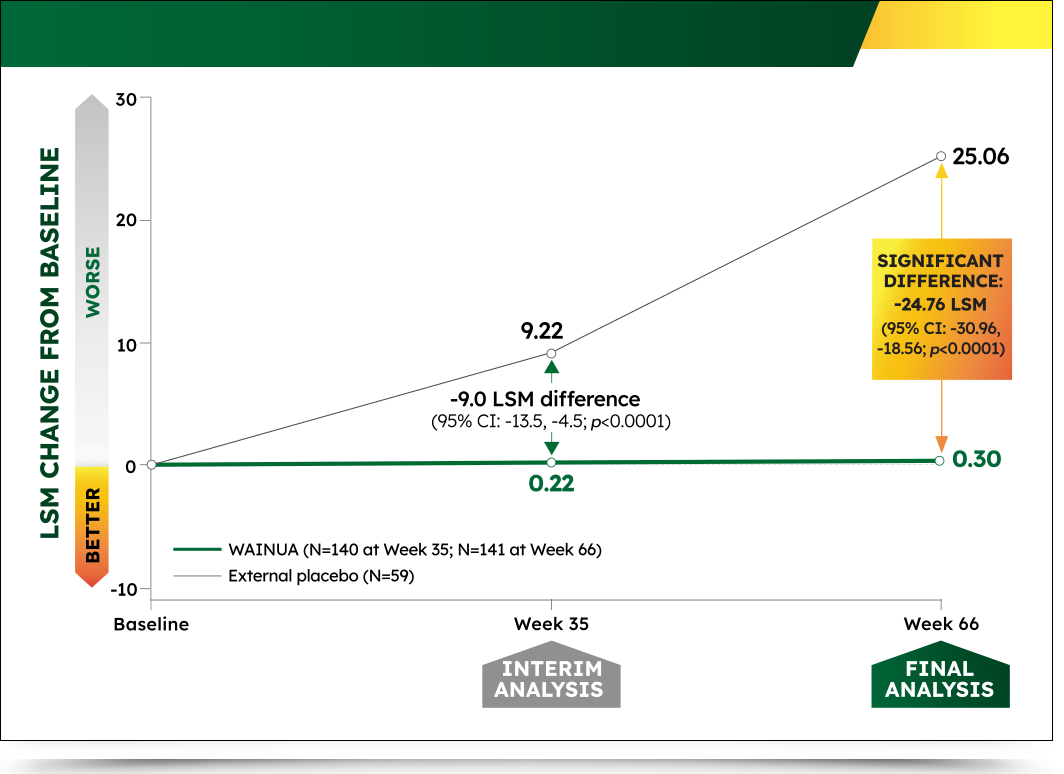
WAINUA significantly slowed progression of neuropathy as measured by the mNIS+7 composite score vs. external placebo at Week 35 and through Week 66 (co-primary efficacy endpoint)1*

Change in the mNIS+7 composite score through 66 weeks1,2

Change in the mNIS+7 composite score through 66 weeks1,2 Change in the mNIS+7 composite score through 66 weeks1,2
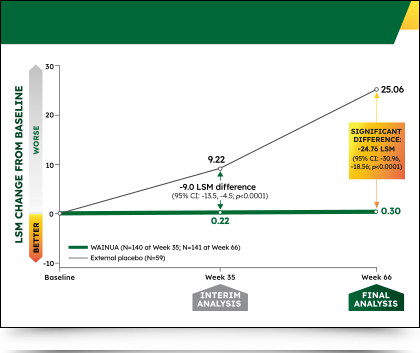
  • LSM change from baseline at Week 35 (interim analysis): 0.22 WAINUA vs. 9.22 external placebo (difference: -9.0; 95% CI: -13.5, -4.5; p<0.0001)
  • LSM change from baseline at Week 66 (final analysis): 0.30 WAINUA vs. 25.06 external placebo (difference: -24.76; 95% CI: -30.96, -18.56; p<0.0001)

Adapted from the WAINUA Product Monograph and Coelho T, et al.1,2

The statistical significance of the Week 66 results was not formally tested due to statistically significant results at Week 35.1

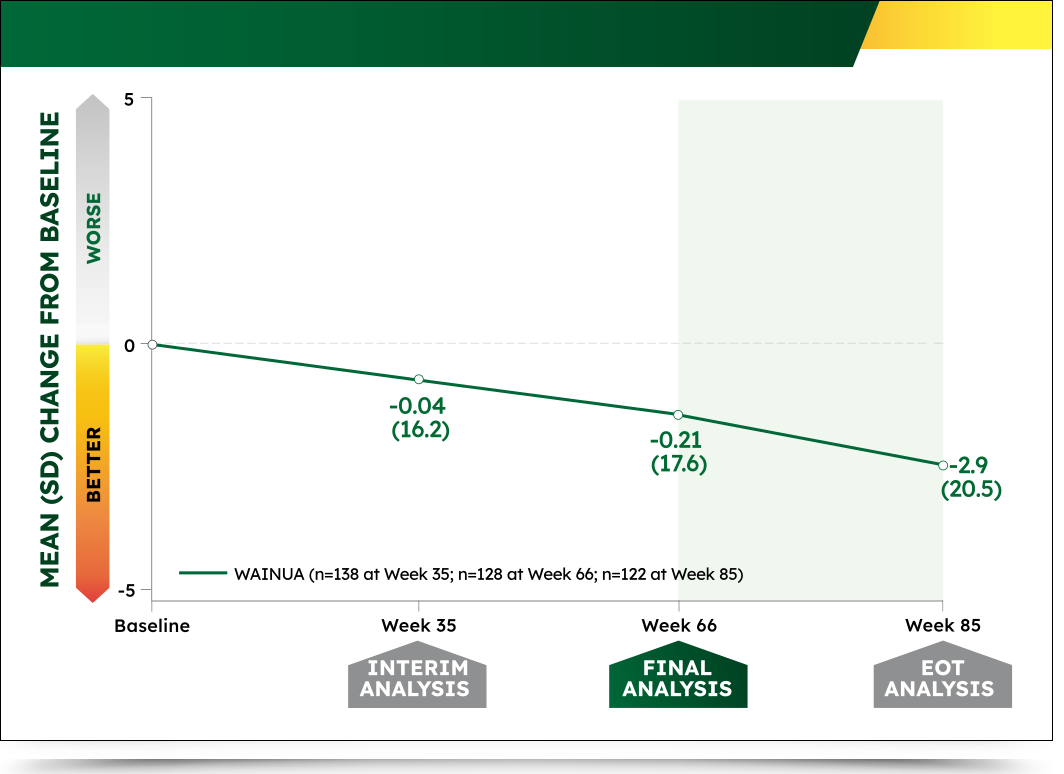
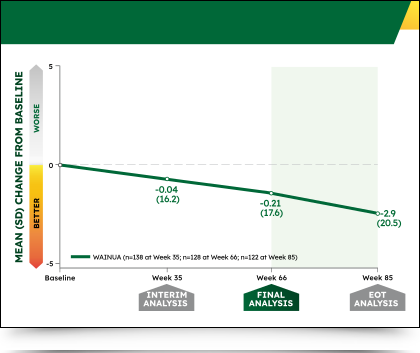
An observed effect on the mNIS+7 composite score was consistent and sustained with WAINUA through the end of treatment at Week 851*

Change in the mNIS+7 composite score through 85 weeks1,3

Change in the mNIS+7 composite score through 66 weeks1,2 Change in the mNIS+7 composite score through 66 weeks1,2

Adapted from the WAINUA Product Monograph and Coelho T, et al.1,3

Week 85 data are not available for the external placebo group, as the treatment period in the NEURO-TTR study was limited to 66 weeks.1

The mNIS+7 is an objective assessment of neuropathy with a range of -22.3 to 346.3 points, where higher scores represent a greater severity of disease.1

The NIS measures deficits in:1

  • Cranial nerve function
  • Muscle strength
  • Reflexes
  • Sensations

And the Modified +7 composite score measures:1

  • Heart rate response to deep breathing
  • Quantitative sensory testing (touch-pressure and heat-pain)
  • Peripheral nerve electrophysiology

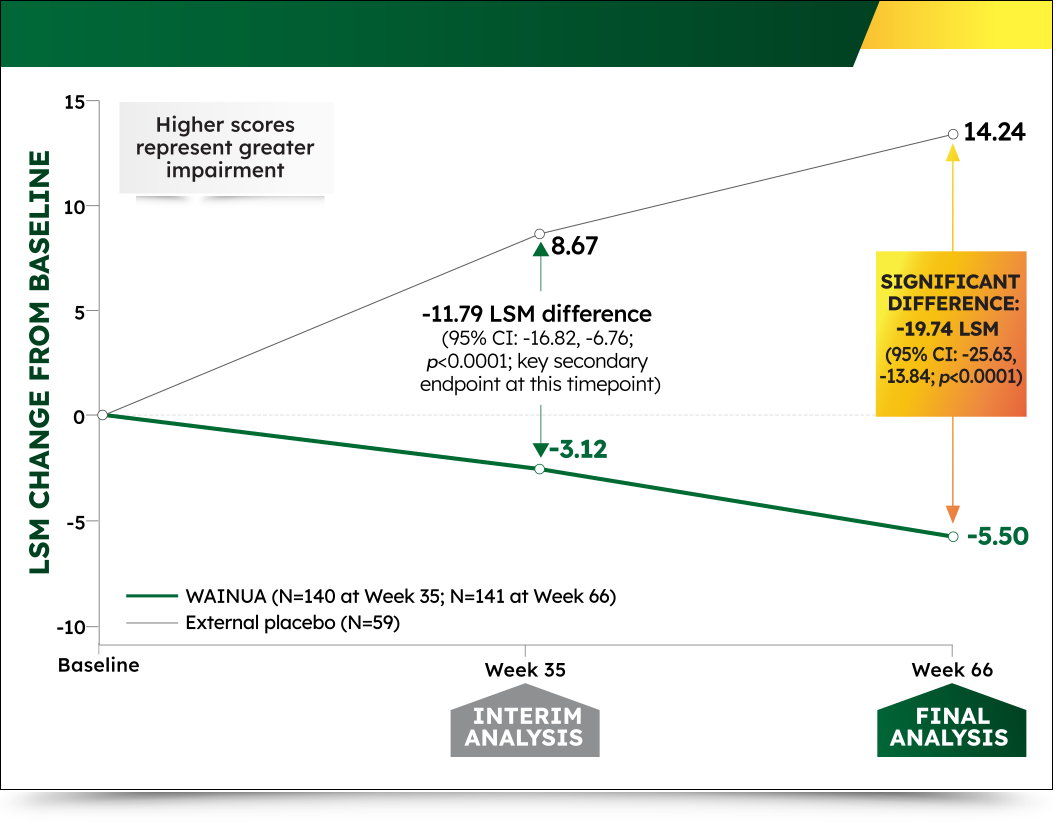
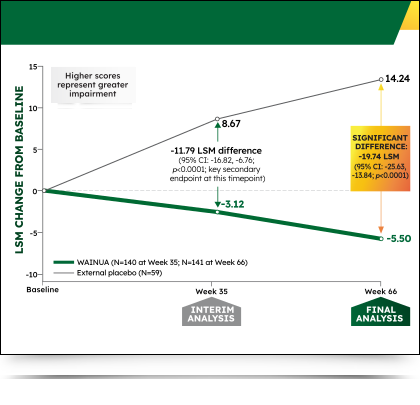
WAINUA significantly improved quality of life as measured by the Norfolk QoL-DN total score vs. external placebo at Week 35 and through Week 66 (co-primary efficacy endpoint)1*

Change in the Norfolk QoL-DN total score through 66 weeks1

Change in the Norfolk QoL-DN total score through 66 weeks11,2Change in the Norfolk QoL-DN total score through 66 weeks11,2
  • LSM change from baseline at Week 35 (interim analysis): -3.12 WAINUA vs. 8.67 external placebo (difference: -11.79; 95% CI: -16.82, -6.76; p<0.0001; key secondary endpoint at this timepoint)
  • LSM change from baseline at Week 66 (final analysis): -5.50 WAINUA vs. 14.24 external placebo (difference: -19.74; 95% CI: -25.63, -13.84; p<0.0001)

Adapted from the WAINUA Product Monograph.1

The statistical significance of the Week 66 results was not formally tested due to statistically significant results at Week 35.1


Given the subjective nature of the Norfolk QoL-DN assessment, care should be taken when interpreting the significance of this data, particularly in the context of an open-label trial.1

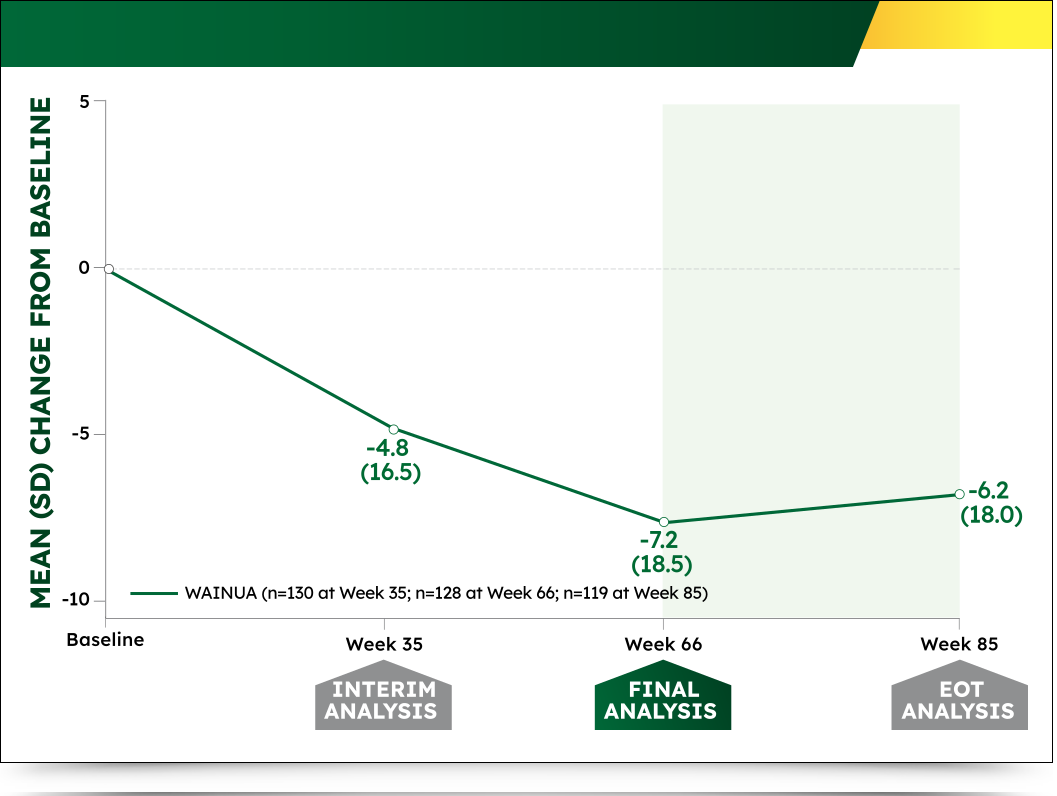
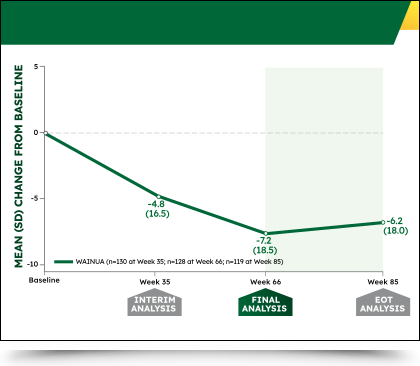
The mean Norfolk QoL-DN total score remained stable through Week 85 with WAINUA1*

Change in the Norfolk QoL-DN total score through 85 weeks1,3

Change in the Norfolk QoL-DN total score through 66 weeks11,2Change in the Norfolk QoL-DN total score through 66 weeks11,2

Adapted from the WAINUA Product Monograph and Coelho T, et al.1,3

Week 85 data are not available for the external placebo group, as the treatment period in the NEURO-TTR study was limited to 66 weeks.1

The Norfolk QoL-DN questionnaire is a patient-reported assessment. The version used in the trial had a range from -4 to 136 points, where higher scores represent greater impairment. It evaluates the subjective experience of neuropathy in the following domains:1

  • Physical functioning/large fibre neuropathy
  • Activities of daily living
  • Symptoms
  • Small fibre neuropathy
  • Autonomic neuropathy

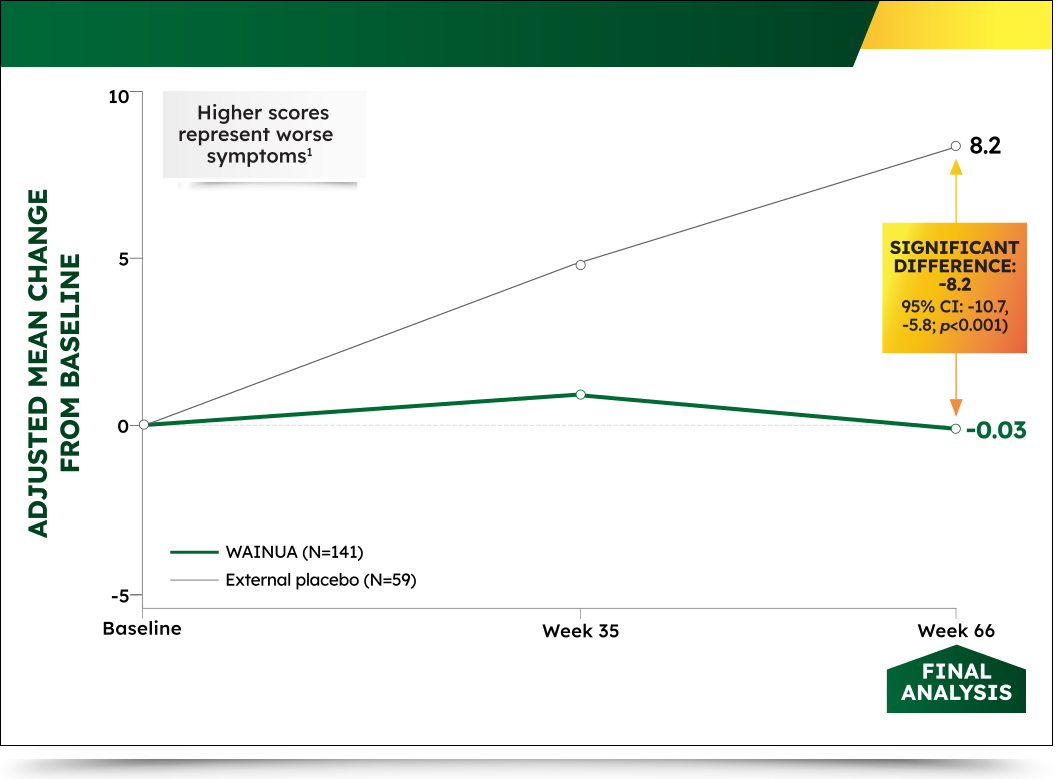
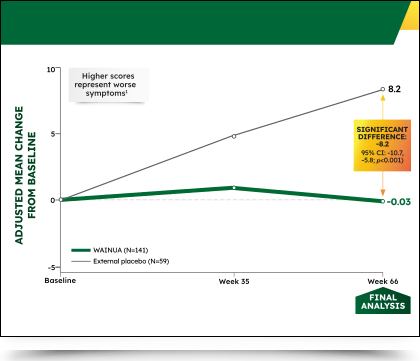
WAINUA demonstrated statistically significant superiority in neuropathy symptom severity vs. external placebo, as measured by the change from baseline in NSC score (a patient-answered questionnaire) at Week 66 (secondary endpoint)1,2

Change in NSC score through 66 weeks2,3

Change in the Norfolk QoL-DN total score through 66 weeks11,2Change in the Norfolk QoL-DN total score through 66 weeks11,2

Adjusted mean change from baseline at Week 66 (final analysis): -0.03 WAINUA vs. 8.2 external placebo (difference: -8.2; 95% CI: -10.7, -5.8; p<0.001)

Adapted from Coelho T, et al.2,3

NSC benefits at Week 66 remained consistent through Week 85 with WAINUA.1


Week 85 data are not available for the external placebo group, as the treatment period in the NEURO-TTR study was limited to 66 weeks.1

The NSC is a patient-answered questionnaire in which higher scores represent worse symptoms. It is used to quantify the type, distribution, and severity of:1

  • Muscle weakness
  • Sensory symptoms
  • Pain symptoms
  • Autonomic symptoms

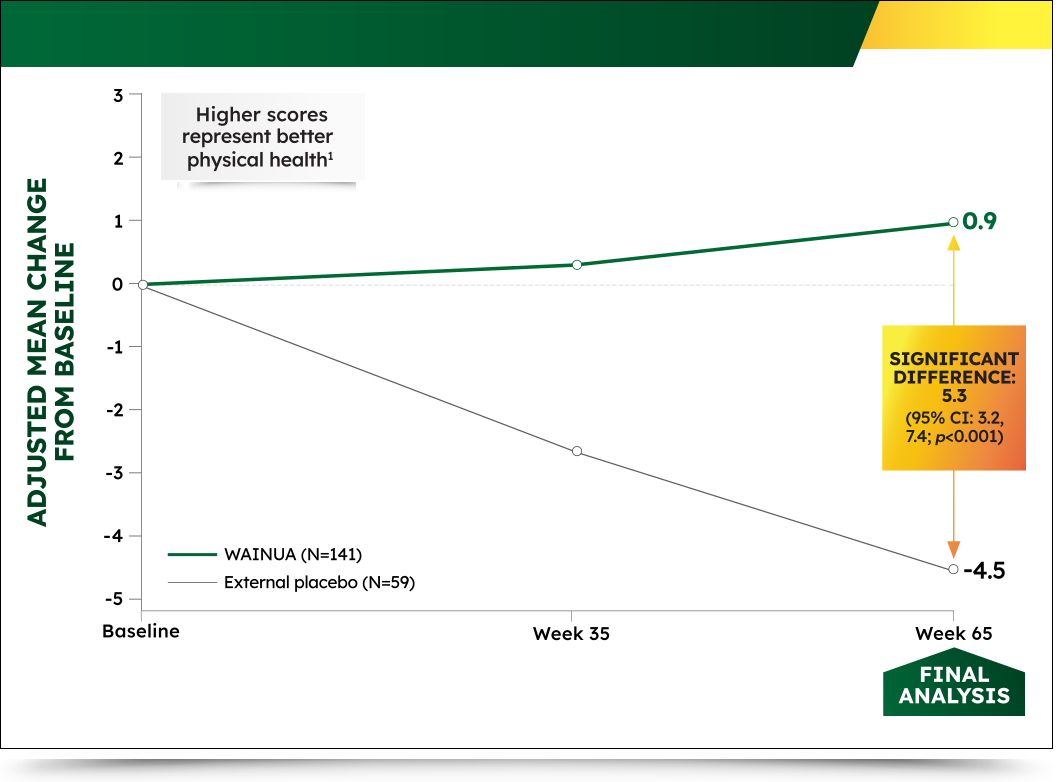
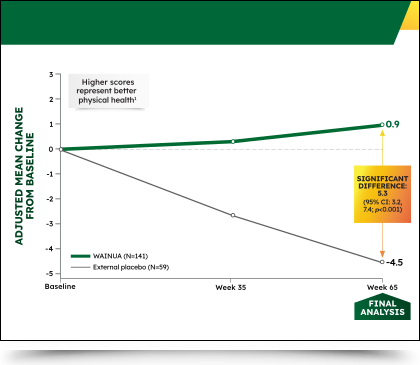
WAINUA demonstrated statistically significant superiority in the change from baseline in the physical component score (PCS) of SF-36 vs. external placebo at Week 65 (secondary endpoint)1,2

Change in SF-36 PCS score through 65 weeks2,3

Change in the Norfolk QoL-DN total score through 66 weeks11,2Change in the Norfolk QoL-DN total score through 66 weeks11,2

Adjusted mean change from baseline at Week 65 (final analysis): 0.9 WAINUA vs. -4.5 external placebo (difference: 5.3; 95% CI: 3.2, 7.4; p<0.001)

Adapted from Coelho T, et al.2,3

SF-36 PCS results continued to trend toward improvement through Week 85 with WAINUA.1


Week 85 data are not available for the external placebo group, as the treatment period in the NEURO-TTR study was limited to 66 weeks.1

The SF-36 PCS refers to the physical component score of a health survey in which higher scores represent better physical health. The version used in NEURO-TTRansform included 4 scales assessing:1

  • Physical function
  • Role limitations caused by physical problems
  • Bodily pain
  • General health

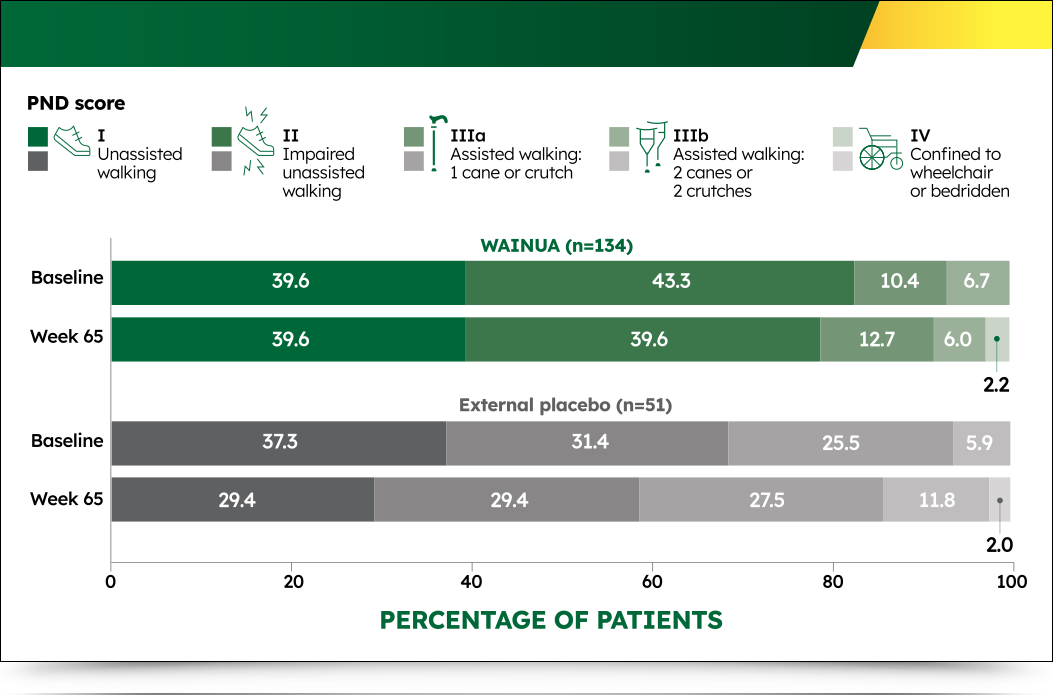
WAINUA demonstrated statistically significant superiority in the change from baseline in the polyneuropathy disability measure (PND score) vs. external placebo at Week 65 (p<0.05; secondary endpoint)1,2

Change in PND score at Week 652

Change in the Norfolk QoL-DN total score through 66 weeks11,2Change in the Norfolk QoL-DN total score through 66 weeks11,2

Adapted from Coelho T, et al.2

PND benefits at Week 66 remained consistent through Week 85 with WAINUA.1


Week 85 data are not available for the external placebo group, as the treatment period in the NEURO-TTR study was limited to 66 weeks.1

The PND categorises disability by mobility (e.g., need for stick, crutch, wheelchair, or bed), with a higher PND score representing worse disability. The scores are defined as follows:1,2

  • I = Unassisted walking
  • II = Impaired unassisted walking
  • IIIa = Assisted walking with 1 cane or crutch
  • IIIb = Assisted walking with 2 canes or crutches
  • IV = Confined to a wheelchair or bedridden

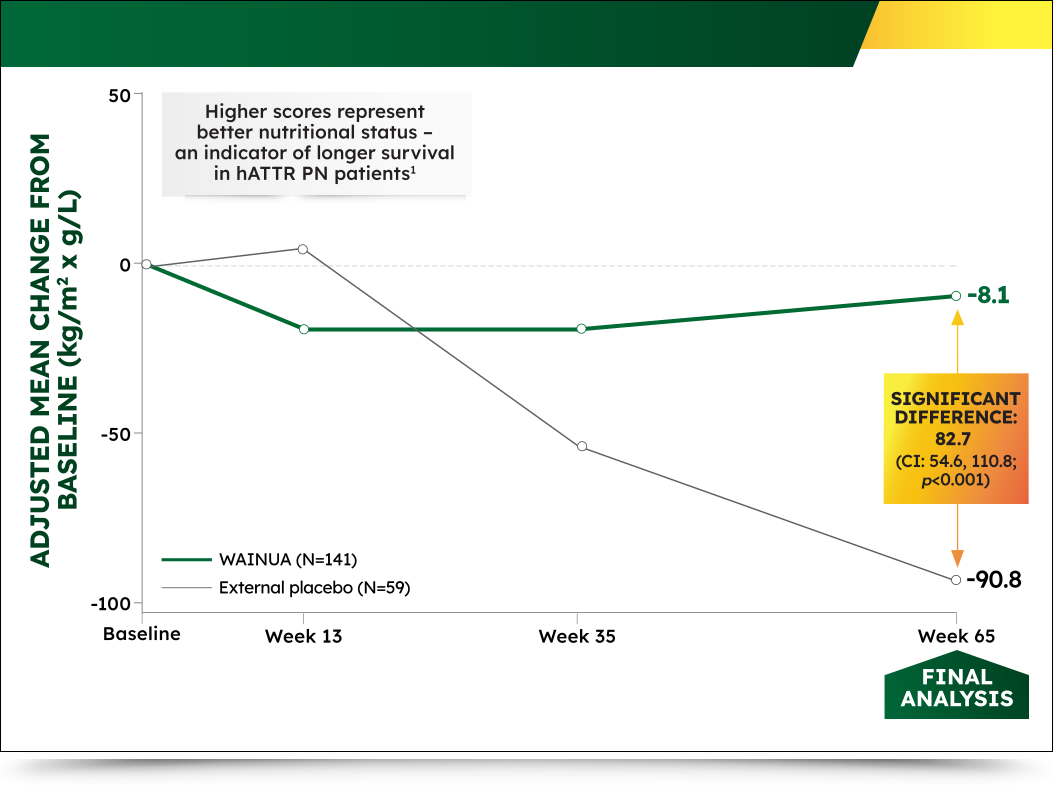
WAINUA demonstrated statistically significant superiority in nutritional status as measured by the change from baseline in mBMI vs. external placebo at Week 65 (p<0.001; secondary endpoint)1,2

Change in mBMI through 65 weeks2,3

Change in the Norfolk QoL-DN total score through 66 weeks11,2Change in the Norfolk QoL-DN total score through 66 weeks11,2

Adjusted mean change from baseline (kg/m2 x g/L) at Week 65 (final analysis): -8.1 WAINUA vs. -90.8 external placebo (difference: 82.7; 95% CI: 54.6, 110.8; p<0.001)

Adapted from Coelho T, et al.2,3

mBMI benefits at Week 66 remained consistent through Week 85 with WAINUA.1


Week 85 data are not available for the external placebo group, as the treatment period in the NEURO-TTR study was limited to 66 weeks.1

Modified body mass index (BMI × serum albumin) is an acceptable method of assessing nutritional status in ATTR.1

Higher mBMI scores represent better nutritional status and are considered to be an indicator of longer survival in hATTR PN patients.1

See NEURO-TTRansform trial design

mNIS+7: modified Neuropathy Impairment Score+7; Norfolk QoL-DN: Norfolk Quality of Life – Diabetic Neuropathy; NSC: neuropathy symptoms and change; SF-36: short-form 36-item health survey (version 2); PCS: physical component score;

PND: polyneuropathy disability; mBMI: modified body mass index; TTR: transthyretin; LSM: least squares mean; CI: confidence interval; SD: standard deviation; EOT: end-of-treatment; BMI: body mass index; ATTR: transthyretin-mediated amyloidosis;

hATTR: hereditary transthyretin-mediated amyloidosis; PN: polyneuropathy.

* At baseline, the mean mNIS+7 composite score was 81.3 (SD 43.4) and the mean Norfolk QoL-DN
total score was 44.1 (SD 26.6).1

References: 1. WAINUA® Product Monograph. AstraZeneca Canada Inc. August 26, 2025. 2. Coelho T, Marques Jr W, Dasgupta

NR, et al. Eplontersen for hereditary transthyretin amyloidosis with polyneuropathy. JAMA. 2023;330(15):1448-1458.
3. Supplementary Online Content for: Coelho T, Marques Jr W, Dasgupta NR, et al. Eplontersen for hereditary transthyretin amyloidosis with polyneuropathy. JAMA. 2023;330(15):1448-1458.

  • Privacy Policy
  • Legal Notice
  • Cookie Policy
  • Contact Us

WAINUA® is a registered trademark of AstraZeneca AB, used under license by AstraZeneca Canada Inc.

The AstraZeneca logo is a registered trademark of AstraZeneca AB, used under license by AstraZeneca Canada Inc.

© AstraZeneca Canada Inc. 2025

CA-11782

PrWAINUA®eplontersen injectionAstraZenecaReviewed by PAABMember of INNOVATIVE MEDICINES CANADA
Back to Top

AZ Reg Popup


Sign up for AstraZeneca mail

Sign up for AstraZeneca mail to stay connected with your representative(s) and receive communications from AstraZeneca.

3 reasons to sign up:

Icon 1

Easy-to-access patient tools Educational materials requested by you arrive in your inbox ready to print or email.

Icon 2

Don’t miss out on educational events that may interest you Paperless invitations go straight from your inbox into your calendar.

Icon 3

Stay informed Receive the latest news about our products and more.

Receive information selected for you and your patients.

REGISTER NOW for AstraZeneca mail